At Thamer International School (T.I.S.), we inspire students to reach their full potential through two distinguished academic pathways. Each program is carefully designed to align with students’ goals, preparing them for a successful future.
a) British Program:
Our British Program follows the prestigious Cambridge Upper Secondary Curriculum, preparing students for internationally recognized qualifications: Cambridge IGCSE (Grades 9–10) and GCE A Levels (Upper Secondary Stage).
Students experience a broad and balanced education across a variety of subjects, guided by learner-centred and enquiry-based approaches. Our comprehensive offerings include:
- English as a First Language & Second Language
- Arabic as a First Language
- Mathematics
- Science: Chemistry, Biology, Physics
- Business Studies, Accounting, ICT
Cambridge qualifications are recognized by top universities worldwide, giving T.I.S. students the confidence that their education is valued both locally and internationally. This program is ideal for learners seeking rigorous academic preparation with a global perspective.
b) American Program:
Our American Program emphasizes diversity, creativity, and critical thinking through a four-year, 32-credit curriculum (Grades 9–12). This pathway nurtures well-rounded students with the knowledge, skills, and character to thrive in a global community.
Program Objectives:
- Develop critical thinking and integrate knowledge with essential skills
- Promote communication and collaborative expression of ideas
- Foster creativity, perseverance, and technological proficiency ·
- Strengthen teamwork and social skills ·
- Build character, self-esteem, and global awareness
- Encourage respect and appreciation for diverse cultures
- Instill confidence and resilience
- Highlight that education is a joyful journey and a lifelong investment
The American Program covers Mathematics, Biology, Chemistry, Physics, World History, Psychology, English, and more, ensuring students graduate as confident, adaptable, and capable learners ready to succeed in higher education and beyond. Our students proudly represent Thamer’s values and soft skills wherever they go with readiness to make their mark in the world.
Exams:
Examination testing dates should be reviewed and updated to reflect the current academic calendar. Texts should be spaced from the photos in both British and American exams.
PUBLISHED ON
Thamer International Schools prepares students in Grades 6–8 for a smooth and successful transition to Senior School.
Our Lower Secondary curriculum combines the American Common Core and Next Generation Science Standards with the Cambridge Lower Secondary framework, giving teachers a flexible platform to develop students’ academic skills, critical thinking, and confidence across all subjects.
Student progress is tracked through internationally recognized assessments, including the American MAP® tests and Cambridge Lower Secondary exams, providing parents with clear insights into their child’s strengths, growth areas, and future learning pathways.
At the end of Grade 8, Thamer International Schools hosts a comprehensive orientation for parents and students, outlining both the American and British Senior School pathways and university requirements worldwide. With expert guidance from our academic team, families can confidently choose the pathway that best suits their child, either British (IGCSE, GCE A Level) or American (SAT, SAT II), setting them on the path to future success.
Throughout these years, the soft skills cultivated in earlier stages continue to shape our students’ personalities, helping them grow into individuals who are more Intelligent, Dynamic, Well-educated reader, Courageous, Productive and innovative, Challenge taker, Achiever, Generous, Positive, and Refined.
PUBLISHED ON
Primary KG1-5
Thamer International Schools’ curriculum offers learners an inspiring educational journey built on a carefully designed framework that blends academic rigor with engaging, age-appropriate learning experiences. At every stage of primary education, students are guided to develop knowledge, skills, and understanding through interactive and meaningful activities that nurture curiosity and a love of learning.
The Primary Curriculum at T.I.S. focuses on developing strong foundations across core subjects, including English, Mathematics, Science, ICT, Arabic, Islamic Studies, and Social Studies, alongside enriching programs in STEM, Art, and Physical Education. This balanced approach supports students’ intellectual, creative, physical, and social development.
The curriculum is guided by clear, measurable objectives that integrate the American Common Core and General Science Standards with the British Cambridge Primary Standards. This carefully aligned model ensures that students in the Primary and Lower Secondary stages become well-rounded, confident learners, fully prepared to transition smoothly into Secondary education without academic gaps.
Through a strong emphasis on language, numeracy, and scientific inquiry, the T.I.S. Primary Curriculum empowers learners to communicate confidently, think critically, and apply their knowledge effectively across all core subjects, while student progress is measured against internationally recognized benchmarks through the American MAP® assessments and Cambridge Primary Checkpoint, providing parents and educators with clear and reliable insights into academic achievement aligned with global standards.
At this stage, many essential soft skills begin to emerge, and the character of Thamer students becomes increasingly clear, as they grow to have these characteristics and develop into Intelligent, Dynamic, Well-educated reader, Courageous, Productive and innovative, Challenge taker, Achiever, Generous, Positive, and Refined individuals.
PUBLISHED ON
T.I.S. prepares its students to appear for the official French External Examination. Students from various schools were hosted by T.I.S. to appear for the DELF exams this year. It was for the first time that a school in Jeddah was chosen to do so by the french Embassy.
The DELF (Diploma in French Language Studies) and the DALF (Diploma in Advanced French Language Studies) are official diplomas issued by the French Ministry of Education to certify the French skills of foreign students and French people who come from a non French-speaking country
The DELF and DALF comprise of 6 independent diplomas. The candidate may thus directly register for the examination of their choice. Preparation workshops are available in our school. Each level assesses the following 4 skills: Oral comprehension and Spoken French, Written Comprehension and Written French. The minimum mark to be awarded with the diploma is 50/100 points (eliminatory mark is less than 5/25).
DELF A1 This level recognises basic knowledge. It is the most basic level at which a language is used, called the "discovery" stage. At this stage, the learner can interact in a simple way: he/she can speak about him/herself and his/her immediate environment. The language spoken is French (Francais).
PUBLISHED ON
Northwest Evaluation Association (NWEA) is a global non-profit educational services organization known for its assessment, Measures of Academic Progress (MAP) These assessments measure our students' growth and learning needs, foster educators’ ability to accelerate our students' learning, and are based on research that supports assessment validity and data interpretation.
At Thamer International Schools, in any given classroom, students learn and grow at different rates. To help tailor teaching to meet the needs of all our students, this computer adaptive research based assessment is given thrice during the school year in grades K-8. The NWEA assessments deliver precise and immediate results that identify learning levels, and the data is used to differentiate instruction.
NWEA assessments react to each student’s answers. In the testing world, this makes assessments “adaptive,” or personalized to measure the needs of every student. If your child answers a question correctly, the test follows up with a more challenging question. If your child answers incorrectly, the test follows up with an easier question.
This computer-adaptive test dynamically adjusts to each student’s instructional level for personalized testing. It provides a clear understanding of our students’ performance across a range of subjects without being limited to a particular grade level, making it easy to develop individualized learning plans. NWEA assessments can be used as a diagnostic tool to assist with student placement, and to measure gains to provide insight into program effectiveness.
PUBLISHED ON
Thamer International Schools believe that homework plays a critical role in teaching and learning. It also provides an excellent opportunity for parents to become aware of their child's daily academic experiences.
The purpose of homework is to strengthen academic skills and reinforce concepts taught by teachers in school. Its value is borne out in a variety of research studies. Appropriately assigned homework not only improves student achievement, it also develops time management skills, self discipline, independence, personal responsibility, and the ability to follow directions and prioritize.
The intent of these assignments is to promote sound homework practices and identify the responsibilities of teachers in their role of assigning appropriate homework, students in their role of accomplishing the tasks assigned and parents in their role of encouraging and supporting their children.
A. Parent's Role and Responsibilities
It is the parent's role to reinforce the importance of homework and encourage completion in a timely manner. Parents need to monitor their child's homework. If parents set rules within their home that define where, when and under what conditions their child needs to complete their work, the task becomes more routine and less cumbersome. It is essential that parents provide guidance for their child, not answers. Parents are encouraged to use the School's website to find out specifically the agenda requirements when a child is absent.
B. Homework Tips for Parents
-
Express to your child the importance of a good education and the value of doing homework.
-
Make sure your child has a quiet, well-lit place to do homework. Make this location a permanent one.
-
Watch your child for signs of frustration. Suggest a short break and then return to the task.
-
If your child is struggling to complete an assignment, you may need to contact your child's teacher.
-
At various times during the school year, positively reinforce how well your child is doing.
C. Student's Role and Responsibilities
It is the responsibility of the student to record their homework assignments. Students are encouraged to seek clarification about homework assignments they feel are unclear. It is their responsibility to complete homework and return at the time it is due. Students at all levels who are experiencing difficulty with their homework are encouraged to seek help from their teachers.
It is incumbent on parents in the early grades and students themselves as they mature to request homework assignments missed based on absences. Students who are ill may take it upon themselves to complete homework while staying home, depending upon the illness.
D. Teacher's Role and Responsibilities
Teachers are responsible for assigning meaningful homework to all students and for providing the necessary explanation and direction required, so that students can accomplish the work with reasonable success. Teachers will be mindful of students with limited resources, like internet access at home, and will provide suggestions for how students might accomplish these assignments in school. Homework will be checked and proper feedback given to students.
Teachers need to be cognizant that students' illnesses may preclude them from completing and returning homework immediately following their sick days. Students may need an extended defined period of time established by the teacher to complete work that was assigned during their illness.
E. Amount of Homework
The following chart suggests the amount of time to be spent on homework at each grade level. There is flexibility in all of these times that are stated based on the fact that individual students complete work at different rates. A significant number of students prefer to complete a portion of their homework in school during study halls or other times that are available during school. Some children prefer to complete assigned homework in advance if they know they have other commitments beyond the school day such as sports competitions or family celebrations. Long-term projects require some homework scheduling on the part of the student, knowing that other assignments need to be completed as well.
To promote consistency and fairness, these are guidelines for the amount of time; however, teachers may vary in their beliefs and system for assigning work. For example, some teachers choose not to assign work over the weekend or during holiday periods.
-
KG2: 30 minutes daily
-
Grade 1& 2: 45 minutes daily
-
Grade 3: 60 minutes daily
-
Grade 4 – 7: 90 minutes daily
-
Grade 8 – 12: 120 minutes daily
These time frames do not include recreational reading. Also, some teachers may assign a specific amount of additional time for reading.
G. Reading—An Important Activity in Conjunction with Homework
Homework often involves a reading assignment with follow up questions related to the comprehension of the material assigned. How often do teachers and parents emphasize the need to read an entire passage before answering any questions? This logical procedure is often not the process followed by the student. Both teachers and parents need to reinforce the appropriate strategy for completing homework. It is a process students need to follow not only to better their comprehension skills, but also to prepare them for standardized testing.
Most importantly, reading for pleasure in itself, is an extremely important leisure activity that has great impact on a student's success. Children are assigned Leveled Reading Books from Grades KG2 to 6. Every week a session is dedicated for this. Parents should encourage their children to read these books on a weekly basis and return them on time. Students from Grades 7 - 12 have easy access to the library where a plethora of books awaits them.
It is proven that students who read regularly are more academically successful at school and efficient in communication skills. It is important for teachers and parents to continually encourage students to read more and often.
PUBLISHED ON
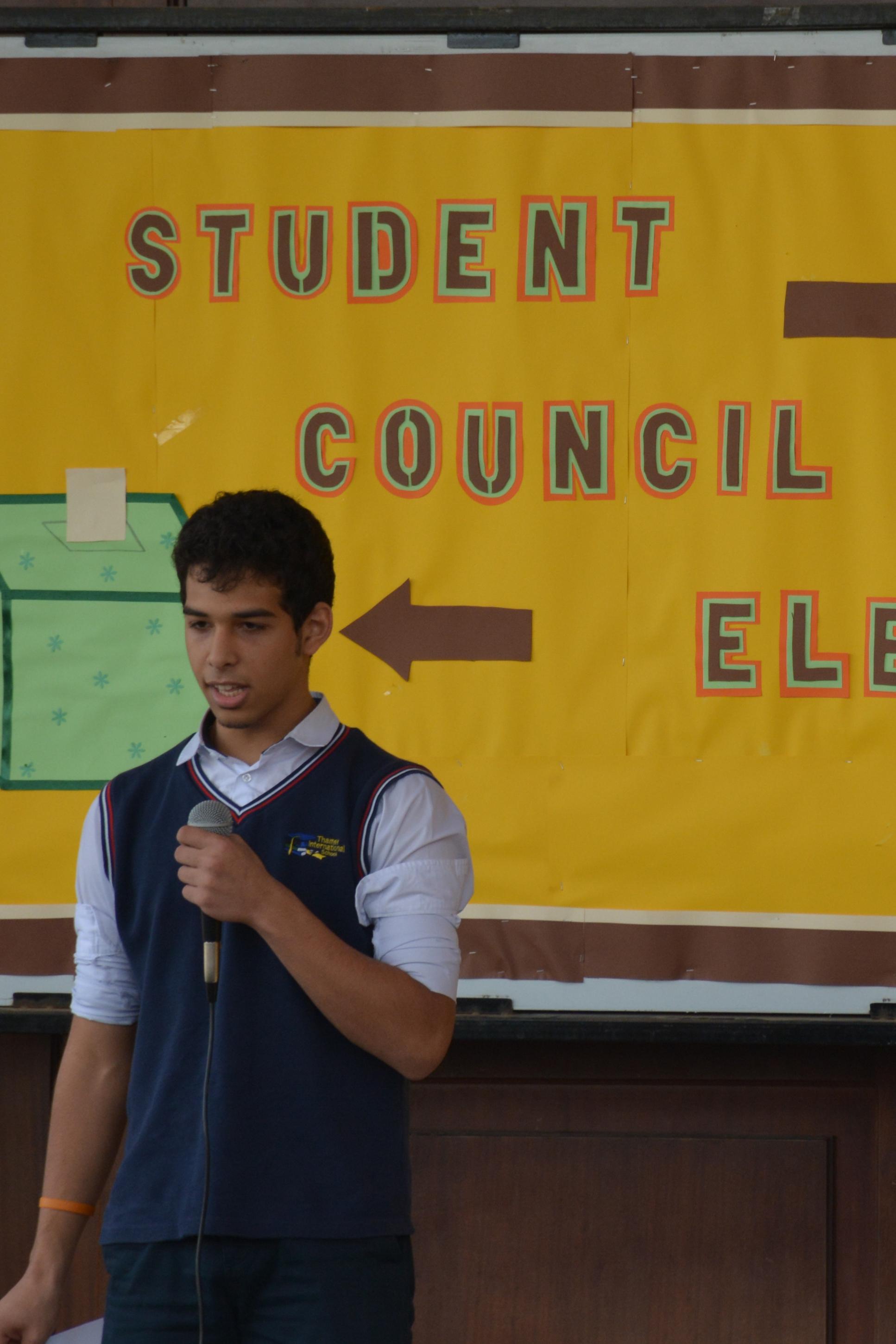
Keeping students in the decision making process ensures that students feel ownership and a connection to the school they attend. Student representatives learn positive communication skills and represent their fellow students voicing their concerns and ideas which are addressed at monthly meetings.
Having a Student Council in both the Middle and the Senior School has been a very interesting experience for everyone and also a great addition to the school’s success. To have the members chosen fair and square, elections take place in three different and essential stages.
-
Stage I:
Students who believe they are eligible enough to become part of the Student Council nominate themselves. Each student of every class gets the chance to vote for two nominees among their classmates. A list of the nominees is immediately made and each student independently writes his/her choices of the nominees in ballots. The nominees also get the chance to vote for any two nominees, excluding themselves. The ballots are counted by the Heads of Schools, and two students from each class are announced winners.
At the end of the first stage elections, students who clear Stage One move on to the next stage.
-
Stage II:
Between the first stage and the second, nominees are given a chance to start campaigns, where they persuade and attempt to convince their peers to cast their votes in their favour. The nominees design signs, pass around some miniature gifts and treats to win more votes. Moreover, they prepare a speech to be delivered on the Election Day. The speech includes the student’s name and class, and a brief explanation of why he/she believes he/she is eligible to become a student council member, what he/she will be able to do as members, and how he/she will be able to help make regular school days more interesting for all students. Each student –except for the nominees themselves- vote for their chosen nominees. The votes are officially counted by team of members and the winners are announced the following week.
These winners are then declared as the official members of the Student Council.
-
Stage III:
These elections take place to select the President, Vice President, Secretary, and Treasurer of the Student Council. The core committee consisting of proficient teachers then unanimously decides which member should be delegated with the various positions based on the understanding of the personality of the members.
A student council logo and name tags for each of the members is designed, which includes the student’s name and personal picture, along with the Student Council’s logo. Several meetings are conducted during which the members compile their ideas for events and suggest them to be put into action. The Student Council plans as many events as possible during the school year, so that this successful and beneficial ritual may continue in the many prosperous years to come.
PUBLISHED ON
